Flashing Oil Light An Emergency Action Plan
Flashing Oil Light An Emergency Action Plan. Seeing a warning light on your dashboard is never a pleasant experience, but few icons are as alarming as the oil can symbol. While a solid oil light is a serious warning, a flashing or flickering oil light is a mechanical emergency. In the world of automotive diagnostics, a flashing light often indicates a “borderline” condition where oil pressure is rapidly fluctuating between functional and catastrophic levels. If you ignore this signal, you are not just risking a breakdown—you are risking the total destruction of your engine within minutes.
In this technical emergency guide, we will break down exactly why your oil light is flashing, the immediate steps you must take to save your vehicle, and the hidden mechanical failures that cause erratic oil pressure.
The 10-Second Rule: Immediate Action Required
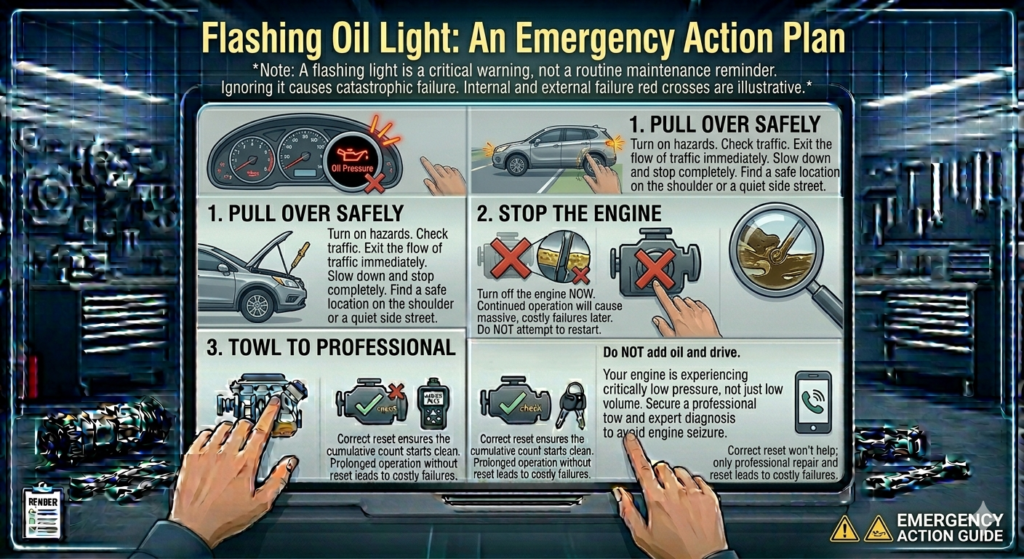
Flashing Oil Light An Emergency Action Plan. If your oil light begins to flash while you are driving, you do not have time to “wait and see.” You must follow these steps immediately:
-
Safely Pull Over: Signal and move to the shoulder or a parking lot immediately. Do not try to make it to the next exit or a gas station five miles away.
-
Kill the Engine: Once stopped, turn the ignition off instantly. Every second the engine runs without stable oil pressure, the metal bearings are being ground down by friction.
-
Pop the Hood: Let the car sit for 5 minutes to allow the oil to drain back into the pan before checking the level.
1. Why a Flashing Light is Different from a Solid Light
Flashing Oil Light An Emergency Action Plan. A solid red oil light means the pressure has dropped below the sensor’s threshold (usually 5–7 PSI) and stayed there. A flashing light, however, tells a different story:
-
Intermittent Pressure Loss: The pump is struggling to maintain a consistent flow. This often happens during braking or cornering when the oil sloshes away from the pickup tube.
-
Electrical Interference: In some cases, a frayed wire or a failing sensor can cause the light to flicker, but you must always assume it is a mechanical failure until proven otherwise.
-
Low Oil Volume: If your oil level is critically low, the pump will occasionally suck in air. When the pump grabs air, the pressure drops; when it grabs oil again, the pressure rises. This cycle causes the light to flash.
2. Technical Causes of Erratic Oil Pressure
Flashing Oil Light An Emergency Action Plan. Beyond just “being low on oil,” several internal mechanical issues can trigger a flashing warning:
A. Sludge-Clogged Oil Pickup Screen
Flashing Oil Light An Emergency Action Plan. If you have extended your oil changes too far in the past, carbon deposits (sludge) can accumulate in the oil pan. This sludge acts like a blanket over the Oil Pickup Tube. As the pump tries to pull oil through, the sludge blocks the mesh screen. The engine may have enough pressure at idle, but as soon as you accelerate, the pump demands more flow than the clogged screen can provide, causing the light to flicker.
B. Failing Oil Pressure Switch (Sensor)
Flashing Oil Light An Emergency Action Plan. The oil pressure switch is a simple spring-loaded diaphragm. Over time, the internal seal can leak, allowing oil to enter the electrical connector. This “short-circuits” the sensor, leading to erratic flashing. While this is a “best-case scenario” repair, it can only be confirmed by a technician using a mechanical pressure gauge.
C. Oil Pump Relief Valve Issues
The oil pump has a built-in relief valve to prevent over-pressurization. If this valve’s spring is weak or stuck partially open, it can cause the oil pressure to fluctuate wildly, especially as the oil thins out when it reaches operating temperature.
3. The “Thin Oil” Phenomenon
Flashing Oil Light An Emergency Action Plan. Many drivers notice their oil light flashes only when the engine is hot and at an idle (e.g., stopped at a red light).
-
The Reason: Motor oil becomes thinner as it heats up. If your engine bearings have excessive clearance (wear) or if you are using an oil with the wrong viscosity (e.g., using 0W-20 when the car requires 5W-30), the thin, hot oil escapes through the bearing gaps too easily.
-
The Result: The pump cannot maintain pressure at low RPMs. As soon as you press the gas, the pump spins faster, builds pressure, and the light goes out. This is a classic sign of internal engine wear.
4. Diagnostic Checklist: What to Do Next?
| Scenario | Potential Cause | Recommended Action |
| Light flashes during turns | Critically low oil level | Add oil immediately and check for leaks. |
| Flickers at idle, goes out with gas | Bearing wear or thin oil | Check oil viscosity; perform a mechanical pressure test. |
| Flashes randomly at high speeds | Clogged pickup screen | Remove oil pan and clean/replace pickup tube. |
| Oil is full, but light is flashing | Sensor or Pump failure | TOW THE VEHICLE. Do not drive. |
5. Can You Drive with a Flashing Oil Light?
The answer is a definitive NO.
Modern engines, especially those with turbochargers and variable valve timing (VTEC, VANOS, MultiAir), rely on oil pressure to function. Without it:
-
The Turbocharger Fails: The turbo spins at 150,000+ RPM. Without oil, its bearings will melt in under 30 seconds.
-
Timing Chain Tensioners Collapse: Most modern timing chains are held tight by oil pressure. If the pressure flickers, the chain can go slack, jump a tooth, and cause the pistons to hit the valves.
-
Engine Seizure: The main bearings will overheat, expand, and fuse to the crankshaft, effectively “locking” the engine.
Conclusion: Respect the Flash
Flashing Oil Light An Emergency Action Plan. A flashing oil light is your engine’s way of telling you it is suffocating. It is a high-priority mechanical distress signal that requires immediate intervention. While it could be as simple as a $15 sensor or being two quarts low on oil, the risk of ignoring it is a total engine loss.
Always keep a quart of oil in your trunk for emergencies, but if the light continues to flash after you’ve topped off the fluid, trust the warning. Call a professional tow service and have a mechanical oil pressure test performed. It is far better to pay for a tow truck than to pay for a brand-new engine.