7 Warning Signs Needs an Immediate Oil Change
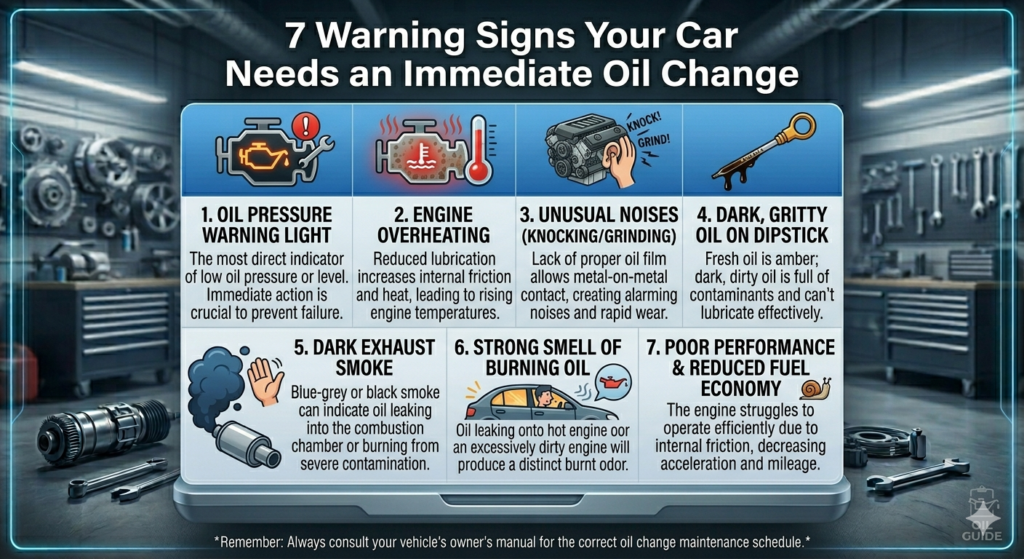
7 Warning Signs Needs an Immediate Oil Change. Modern vehicles are equipped with sophisticated sensors and maintenance reminders, but relying solely on a dashboard light or a sticker on your windshield can be a risky gamble. Motor oil is the lifeblood of your engine, and its degradation is a silent process that can lead to catastrophic mechanical failure if ignored. Understanding the physical and audible “cries for help” from your vehicle is essential for any car owner who wants to avoid a five-figure repair bill.
In this comprehensive guide, we will analyze the seven most common signs that your engine oil has reached the end of its functional life and needs to be replaced immediately to preserve your engine’s internal components.
1. Dark, Gritty, and Contaminated Oil Appearance
7 Warning Signs Needs an Immediate Oil Change. Fresh motor oil typically has a translucent, amber-like color. It is smooth and flows easily. However, as it circulates through the engine, it performs a cleaning function, picking up carbon deposits, microscopic metal shavings, and combustion byproducts. Over time, these contaminants turn the oil into a dark, opaque, and thick liquid.
To check this, you should perform a manual dipstick test at least once a month. Simply wipe the dipstick clean, reinsert it, and pull it out again. If the oil is so dark that you cannot see the metal of the dipstick through it, or if you feel any “grit” or sand-like particles when rubbing a drop between your fingers, the oil is saturated. At this stage, the oil is no longer lubricating; it is actually acting as an abrasive, slowly grinding down your engine’s precision parts.
2. Increased Engine Noise, Ticking, or Knocking Sounds
7 Warning Signs Needs an Immediate Oil Change. One of the primary functions of motor oil is to provide a thin protective film between moving metal parts. When oil is fresh and has the correct viscosity, it acts as a sound dampener, allowing components like valves and pistons to move silently. As oil thins out or becomes filled with debris, that protective barrier disappears.
If you start to hear a “ticking” sound upon startup or a consistent “knocking” sound while idling, it is a sign of metal-on-metal contact. The “ticking” usually comes from the hydraulic lifters in the top of the engine that aren’t receiving enough oil pressure. A “knocking” sound is more severe and often indicates that the bearings in the lower block are failing. If you hear these sounds, an oil change is no longer just a suggestion—it is an emergency.
3. The Persistent Smell of Burning Oil Inside the Cabin
7 Warning Signs Needs an Immediate Oil Change. You should never smell your car’s fluids from the driver’s seat. If the scent of burning oil wafts through your vents, it usually points to one of two problems. First, you may have an external oil leak where oil is dripping onto a hot exhaust manifold. Second, your engine may be “burning” oil internally due to worn piston rings or valve seals.
When oil is old and degraded, it becomes thinner and more likely to seep past seals that would normally hold it back. If the smell is accompanied by a faint blue-tinted smoke from the exhaust, your engine is consuming oil at an unhealthy rate. Ignoring this smell can lead to a low-oil condition, which will cause the engine to overheat and eventually seize.
4. Visible Smoke Emitting from the Exhaust Pipe
7 Warning Signs Needs an Immediate Oil Change. It is normal to see translucent white vapor from your exhaust during cold weather, which is simply water vapor. However, if you see actual smoke—particularly blue or dark gray smoke—coming from the tailpipe, your engine oil is no longer doing its job.
This usually signifies that the oil has lost its viscosity and is leaking into the combustion chamber. When motor oil burns alongside gasoline, it creates thick smoke and leaves behind heavy carbon deposits on your spark plugs and valves. This not only indicates a need for fresh oil but also suggests that the old oil has caused enough wear to compromise the engine’s internal seals.
5. Unexplained Drop in Fuel Economy (MPG)
7 Warning Signs Needs an Immediate Oil Change. If you find yourself visiting the gas station more frequently than usual, the culprit might be under your hood. Motor oil reduces the friction the engine must overcome to turn the wheels. When oil becomes thick and “sludgy” due to age and contamination, the engine has to work significantly harder to move the same parts.
This increased internal resistance, or “drag,” requires more energy, which translates to higher fuel consumption. By changing your oil and filter, you reduce this friction, allowing the engine to operate at its peak mechanical efficiency. A fresh oil change is often the cheapest “performance tune-up” you can give your vehicle.
6. Engine Overheating or Fluctuating Temperature Gauge
7 Warning Signs Needs an Immediate Oil Change. While the radiator and coolant handle the majority of the cooling duties, motor oil is responsible for cooling the “bottom end” of the engine—the crankshaft, bearings, and timing gears. Oil absorbs heat from these high-friction areas and carries it back to the oil pan to be cooled.
When oil is old, it loses its thermal conductivity. It can no longer absorb and dissipate heat effectively. If you notice your temperature gauge creeping higher than normal during stop-and-go traffic, it may be because your oil has turned into a thick sludge that traps heat rather than moving it away. Fresh synthetic oil has superior heat-management properties compared to aged, broken-down oil.
7. Exceeding the Time Limit (Even Without High Mileage)
7 Warning Signs Needs an Immediate Oil Change. This is the most overlooked sign. Many drivers think that if they haven’t driven the recommended 5,000 or 10,000 miles, they don’t need an oil change. This is a dangerous misconception. Motor oil degrades over time through a process called oxidation, even if the car is sitting in a garage.
Furthermore, short trips (less than 10 miles) are actually harder on oil than long highway drives. On short trips, the engine never reaches its full operating temperature, which means moisture and unburned fuel condense in the oil pan. This creates acid and sludge. If it has been more than six months since your last oil change, you should replace the oil regardless of the mileage shown on the odometer.
Summary of Warning Signs and Severity
| Sign | Severity | Immediate Action Required? |
| Gritty/Black Oil | Moderate | Yes, within the next 100 miles. |
| Engine Knocking | Critical | Yes, stop driving immediately. |
| Burning Smell | High | Yes, check for leaks and change oil. |
| Blue Smoke | High | Yes, indicates internal wear. |
| Poor MPG | Low/Moderate | Yes, to save on fuel costs. |
| Overheating | Critical | Yes, to prevent engine warping. |
Conclusion: Why Proactive Maintenance Trumps Reactive Repair
7 Warning Signs Needs an Immediate Oil Change. Waiting for a warning light to appear on your dashboard is a reactive strategy that often leads to unnecessary wear. By being proactive and watching for these seven signs, you are ensuring that your engine remains clean, cool, and well-lubricated. An oil change is the most cost-effective insurance policy you can buy for your vehicle.
Pro Tip: Always keep a log of your oil changes including the date, mileage, and the specific brand/viscosity of oil used. This not only helps you track maintenance but also increases the resale value of your car by proving it has been meticulously cared for.