Motor Oil Color Guide: What Black, Brown, or Milky Oil Means
Motor Oil Color Guide: What Black, Brown, or Milky Oil Means. Monitoring the color of your engine oil is one of the simplest yet most effective diagnostic tools available to a vehicle owner. While modern cars are packed with electronic sensors, the physical appearance of the lubricant on your dipstick provides a direct window into the internal health of your engine. Changes in color can signal anything from normal thermal degradation to catastrophic internal leaks.
In this comprehensive guide, we will decode the visual language of motor oil. We will explain why oil changes color, differentiate between “normal” darkening and “dangerous” contamination, and help you identify the critical signs of milky, frothy, or black oil that require immediate mechanical attention.
The Baseline: What Does Fresh, Healthy Motor Oil Look Like?
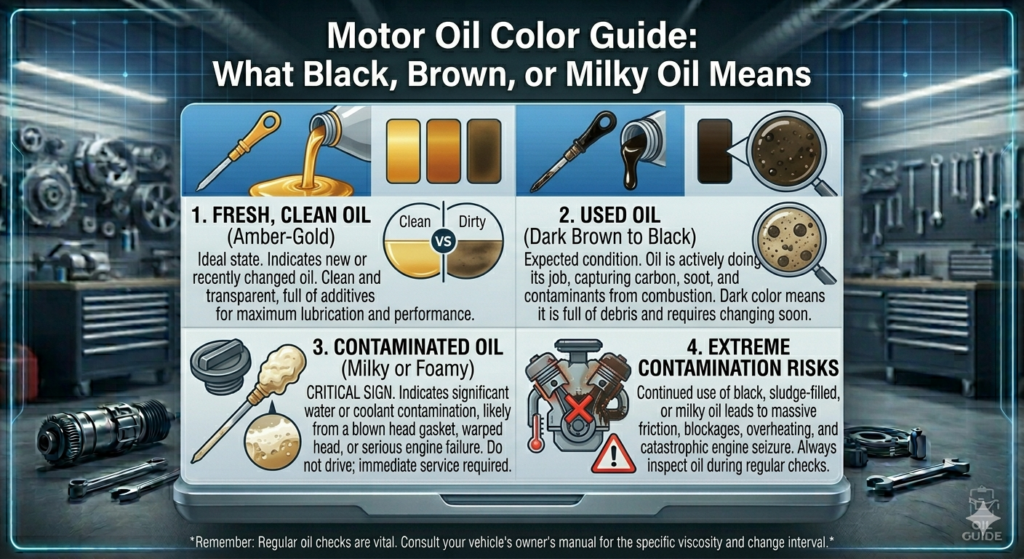
Motor Oil Color Guide: What Black, Brown, or Milky Oil Means. Before you can identify a problem, you must know what “normal” looks like. Fresh motor oil—whether synthetic or conventional—typically has a clear, translucent appearance with a color ranging from pale amber to a golden honey hue.
At this stage, the oil is at its peak performance level. It flows easily, and its chemical additives (such as detergents, dispersants, and anti-wear agents) are fully intact. The oil is free of contaminants and has a clean, slightly oily scent. However, as soon as you start the engine and drive even a few miles, the oil begins its long process of transformation.
1. Dark Brown or Black Oil: Is It Always a Bad Sign?
Motor Oil Color Guide: What Black, Brown, or Milky Oil Means. The most common observation among car owners is that their oil turns dark brown or even pitch black relatively quickly. While this often causes alarm, it is frequently a sign that the oil is doing exactly what it was designed to do.
The Role of Heat and Oxidation
Every time your engine runs, the oil is subjected to extreme thermal stress. This constant heating and cooling cycle leads to oxidation. Just as a sliced apple turns brown when exposed to air, motor oil darkens as it reacts with oxygen under high heat. This is a normal chemical process and does not necessarily mean the oil has failed.
Carbon Soot and Detergents
Motor Oil Color Guide: What Black, Brown, or Milky Oil Means. Modern oils contain powerful detergents designed to scrub the inside of your engine. As the oil circulates, it picks up microscopic carbon soot—a byproduct of combustion—and keeps it in “suspension” so it doesn’t form sludge on your engine parts.
-
Gasoline Engines: The oil will gradually turn from amber to dark brown, and eventually black over several thousand miles.
-
Diesel Engines: In diesel vehicles, the oil can turn pitch black within minutes of an oil change. This is due to the high amount of soot produced by diesel combustion. In this specific case, black oil is perfectly normal and expected.
When is it a problem? If the oil is black and has a thick, gritty texture, or if it smells like it has been “burnt,” it indicates that the oil is saturated and can no longer protect your engine.
2. Milky, Frothy, or “Mayonnaise” Appearance
Motor Oil Color Guide: What Black, Brown, or Milky Oil Means. If you pull out your dipstick and see a substance that looks like a creamy vanilla milkshake or thick mayonnaise, you are looking at a serious condition known as emulsification. This occurs when motor oil mixes with water or engine coolant.
The Short Trip Syndrome (Condensation)
If you see a small amount of white, frothy residue only on the underside of the oil filler cap (but the dipstick looks normal), it might be due to simple condensation. If you frequently drive short distances—less than 5 to 10 miles—the engine never gets hot enough to evaporate the moisture that naturally builds up in the crankcase. This moisture mixes with the oil vapor and settles on the coolest part of the engine: the cap.
-
Solution: Take your car for a long highway drive (30+ minutes) to allow the engine to “cook off” the moisture.
The Deadly Head Gasket Leak
Motor Oil Color Guide: What Black, Brown, or Milky Oil Means. If the oil on the dipstick itself is milky or creamy, you likely have a significant internal leak. This usually means coolant is entering the oil galleries through a blown head gasket, a cracked engine block, or a failed oil cooler. Coolant destroys the lubricating properties of oil almost instantly. If you continue to drive with milky oil, your engine’s bearings will overheat and seize within a very short time.
3. Creamy Coffee or “Chocolate Milk” Color
Similar to the milky appearance, oil that looks like light-colored coffee or chocolate milk is a classic sign of coolant contamination. However, this color often suggests a more “thorough” mix, indicating that the car has been driven for a while with the leak present.
In this scenario, you should also check your coolant reservoir. If the coolant looks oily or “muddy,” you have a cross-contamination issue. This is a mechanical emergency that requires a professional pressure test of the cooling system.
4. Thin, Watery Oil with a Strong Fuel Smell
Motor Oil Color Guide: What Black, Brown, or Milky Oil Means. Sometimes the color of the oil doesn’t change significantly, but its consistency and smell do. If the oil on your dipstick seems unusually thin and carries a sharp, pungent odor of gasoline, you are experiencing fuel dilution.
This happens when unburned fuel escapes past the piston rings (known as “blow-by”) and enters the oil pan. This is common in engines with faulty fuel injectors or in cars that are driven exclusively in cold weather for short trips. Fuel acts as a solvent; it thins the oil and “washes” the protective film off your cylinder walls, leading to rapid engine wear.
Summary: Oil Color Diagnostic Table
| Oil Color/Texture | Likely Cause | Action Required |
| Amber / Golden | Fresh, clean oil. | None; proceed as normal. |
| Dark Brown | Normal oxidation and soot capture. | Monitor mileage; no immediate action. |
| Pitch Black (Gritty) | Saturated with carbon; end of life. | Immediate oil and filter change. |
| Milky / Frothy | Water or Coolant contamination. | Emergency: Check head gasket. |
| Thin / Fuel Scent | Gasoline dilution (Blow-by). | Inspect injectors; change oil soon. |
| Creamy (on cap only) | Short-trip condensation. | Drive a longer distance to evaporate. |
Beyond Color: The “Touch and Smell” Test
Motor Oil Color Guide: What Black, Brown, or Milky Oil Means. Visual inspection is the first step, but your other senses can provide additional clues:
-
The Texture Test: Rub a drop of oil between your thumb and forefinger. It should feel slippery and smooth. If it feels gritty like fine sand, your oil filter is bypassed and the oil is full of metal shavings.
-
The Scent Test: Give the dipstick a sniff. A “burnt” smell indicates the engine is running too hot or the oil has oxidized beyond its limits. A “sweet” smell indicates antifreeze/coolant contamination.
Conclusion: Don’t Judge by Color Alone
Motor Oil Color Guide: What Black, Brown, or Milky Oil Means. While color is a fantastic indicator, it shouldn’t be your only metric for maintenance. Modern synthetic oils are designed to hold onto dirt and darken as they protect your engine. The best strategy is to combine visual inspections with a strict adherence to your vehicle’s recommended oil change intervals.
If your oil is black but still smooth and slippery, you are likely fine. However, if you see milkiness, grit, or smell gasoline, do not wait for a dashboard light to tell you there is a problem. Taking action based on the color of your oil today can save your engine from a catastrophic failure tomorrow.